Home Meet the Blogger Freebies Contact TeachersPayTeachers BlogLovin Instagram Pinterest Facebook Twitter Image Map

August 18, 2023

A Teacher's Purpose

Many teachers across the nation are preparing to head back to school in the upcoming weeks, while some have already began their year.  


Once the school year begins, teachers quickly get bogged down with never ending to-do lists, supplies to buy, curriculum to learn, and professional development to attend to.  The list keeps going......  

This overflowing educational plate is all the more reason teachers should spend time reflecting on "why" they chose this profession.  

Each year I elect to read (and keep posted in my classroom) a poem adapted from Loren Eiseley's work titled "The Starfish Story."  It is a perfect message for teachers to recall why they do what we do.  

We are here to invest in youth. 

Invest in our future. 

Often I present professional development to first and second year teachers, and I like to give them this poem as they leave training.  Attached to the poem, I glue a small plastic starfish to serve as a reminder  of our true purpose in education.  

I know all teachers reach point in the school year when teaching seems too hard and they feel as if they are barely keeping their head above water.  My hope is that they will look at that little starfish, and take a moment to refocus and realize the impact they are making. 

If you would like to share "The Starfish Story" with your colleagues, click the first image above or click here to download the poem for free.  


August 13, 2023

Teacher Recommended Books to Ease Back to School Anxiety

 Going back to school, or starting school for the very first time is a momentous occasion in every child's life.  


Some kids are bursting with excitement and can hardly wait for the first day back.

Others have lots of back to school butterflies fluttering around in their bellies as they dread the start of school.    

My son is one of the anxious ones.  He started first grade this week, and was very worried! I get it!!  There are so many new things for him to experience.  He will see new spaces and new faces.  He will meet new friends and start new routines. SO. MUCH. CHANGE!  

As a parent, I wanted to ease his first day jitters ahead of time by reading books to help prepare him for his first day. 

Books are truly an amazing way to reassure kids when new situations have them scared.  Authors do a fantastic job putting emotions into words and having relatable characters.


Below are six fantastic books to help calm the nerves as students return to school.

Worrysauraus by Rachel Bright (PreK-2)

Perfect for any reader who might feel the flutter of an anxious butterfly in their tummy.  The Worrysaurus has a wonderful day planned, but it isn't long before a small butterfly of worry starts fluttering his his tummy.  What is he to do?   With a little help from his mom, the worrysaurus finds a way to soothe the anxious butterflies. 


The Kissing Hand by Audrey Penn  (PreK-2)

First published in 1993, this heartwarming book has touched the lives of millions of children as they struggle with separation.  School is starting for Chester Raccoon, and he doesn't want to go.  To help ease his fears, Mrs. Racoon shares a family secret called the Kissing Hand to give Chester the reassurance of love at any time. 


Wemberly Worried by Kevein Henkes (PreK-2)

This book is a warm and comforting back to school book favored by many.  Wemberly worries about everything.  Big things. Little things. And things in between. Then it is time for school to start, and Wemberly is worried even more. Wemberly gets to school and realizes that school is too much fun to waste time worrying!


Sad, Sad Bear by Kimberly Gee (PreK-K)

Young readers can relate to bear as he experiences going to school or daycare for the very first time.  Bear feels very, very sad as he is in cub care and mommy is at work.  Luckily, with the help of some brand new friends, Bear is able to cheer up.  


Invisible String by Patrice Karst (Grades 2-4)

This book offers a simple approach to overcoming loneliness, separation or loss that is easy for children to understand and welcome.  In this reassuring story, a mother comforts her two children who are frightened.  She explains that even when she isn't with them, that they are all connected with an invisible string. 


Llama Llama Misses Mama by Anna Dewdney  (Prek-1)

Little faces can connect with Little Llama as he experiences separation anxiety on his first day of school.  Little llama has a strange new teacher, strange new toys and there is lots of kids and lots of noise.  Little llama doesn't know what to do, and he feels so new! 


For more back to school book suggestions check out this list from Today or Scholastic.    

July 18, 2023

Learning Reinforcement: The Best Way to Fight Learning Loss

Are your students forgetful, and their forgetfulness is driving you cRaZy?

If yes--read my previous post about The Forgetting Curve.  It will probably answer some questions you have.....

Obviously students forgetting taught information is NOT great for educators, BUT....there is a way to combat the forgetting curve.  Read about the FIVE ways to soften forgetfullness by reading The Forgetting Curve: Why Students Keep Forgetting and What Teachers Can Do About It!

Perhaps one of the biggest findings in Herman Ebbinghaus's original forgetting experiment was that re-engaging with material again and again, at spaced intervals leads to a dramatic reduction in forgetting.


So, as teachers, we need to design lessons where students are asked to re-retrieve information at spaced intervals.  Hello.....opportunities to respond (OTRs)! OTRs are an excellent way to help cement learning to memory.

Opportunities to respond is a teaching strategy that elicits students responses by posing questions or comments that provide students multiple occasions to answer (Cuticelli, Collier-Meek, & Coyne, 2016)

When you provide students with OTRs it makes learning:
  • Micro.  You are chunking and chewing content that has been delievered.  Students get time to digest and process taught information.
  • Interactive.  Students are involved in their learning
  • Reinforced.  Students are asked to answer, comment or complete an activity about what they are learning. 
Research tells us that teachers should provide 3-5 OTRs per minute for simple responses (verbal or gestural) and 1 OTR per minute when the OTR is more complex (think solving a multi-step math problem). For very complex tasks, like answering a prompt in writing, 1 OTR per 20 to 30 minutes is sufficient. (MacSuga-Gage & Simonsen, 2015).

Now, although an increase in OTRs is good....the goal should be quality OTRs over quantity. 


So, what might be some ways to get quality OTRs in your classroom?

Students should be: 

We will take a deep dive into the three types of OTRs in the preceeding blog posts!  So, stay tuned.  


In the meantime, take a look at this resource from Tennessee Behavior Supports Project at Vanderbuilt University  Or, this resource from the Institute of Education Sciences which is funded by the US Department of Education. 


References

MacSuga-Gage, A. & Simonsen, B. (2015). Examining the effects of teacherdirected opportunities to respond on student outcomes: A systematic review of the literature. Education and Treatment of Children, 38, 211-240.

July 6, 2023

The Forgetting Curve: Why We Keep Forgetting and What Teachers Can Do About It

Are your students forgetful, and their forgetfulness is driving you bananas?

If yes--read my previous post about The Forgetting Curve.


Basically, our brains are hardwired to get rid of any information they don't deem necessary for survival.  The Forgetting Curve presents a real challenge for educators.....after all our job is to bestow knowledge to students.

So how do we fight the forgetting curve?  How do we help students retain taught information?  

We combat the Forgetting Curve in following ways:

1. Improve Clarity


Make information easy to absorb from the onset by using learning intentions and success criteria.  We want students to know what we will teach them and how they will know they're successful.  We should tell them BEFORE we teach.  

Check out this quick video about learning intentions an success criteria from educational guru, John Hattie:


2. Learning Reinforcement


Perhaps one of the biggest findings in Ebbinghaus's original experiment was that re-engaging with material again and again, at spaced intervals, leads to a dramatic reduction in the forgetting curve (check out that graph below!)

So, as teachers, we need to design lessons where students are asked to re-retrieve information at spaced intervals.  This is an excellent way to help cement learning to memory.


3. Make Learning Relevant


We all remember information easier if the topic is something we are passionate about.  How might we present information to students to help them care about it and to help them see the relevancy?  


4. Make Learning Interactive


People learn better when they are actively involved.  We must give learners opportunities to interact with the content and not be passive observers.  Learning is not a spectator sport!


5. Use Microlearning 


Microlearning is a fancy word for chunking and chewing information.  Information is easier to learn when it comes in bite-sized pieces.  A long teaching session makes it difficult for our brains to absorb all of the information.  


June 25, 2023

The Forgetting Curve: Why We Keep Forgetting

Have you ever experienced teaching a skill and when you bring it up again, students act like they have never heard it? 

Annoying, right?

Or, you begin to build upon learning students were supposed to have mastered last year, and THEY SWEAR they NEVER were taught it?

Frustrating, right? 

Well, it turns out.....your students might be telling you the truth.  

They might really have forgotten.

Over 100 years ago, German psychologist Hermann Ebbinghaus wanted to understand more about memory, why we forget and what we can do to prevent it. 

So, he conducted a study, using himself as the subject.  

He presented himself with a list of nonsense CVC words (i.e. dok, bov ) and attempted to recall those nonsense words over different lengths of time.

Ebbinghaus discovered that when you first learn something, the information disappears at an exponential rate without retention.  

According to Ebbinghaus's research you lose 50% of all information within a day and 90% of all new information within a week (Virtanen, 2023).  


Check out this short video from Growth Engineering, which does a fantastic job describing the forgetting curve!  This would be a great video to share with administrators and fellow teachers.


Over the years, many researchers have replicated Ebbinghaus's study to see if his findings were accurate.  

AND.....all studies reached the same conclusion Ebbinghaus did.  The forgetting curve is real, folks! 

So what were the findings Ebbinghaus discovered about knowledge retention?  The four key takeaways are:


1. Relevancy  


  • Memories are stronger when an individual has an interest in the information being presented.

2. Time


  • The biggest drop in retention happens soon after learning.  Learners will forget an average of 90% of new information within the first seven days.


3. Presentation 


  • The way information is presented matters.  Make learning logical and clear.


4. Feelings


  • Physiological factors (such as sleep and stress) influence how well we retain information.  


We know the forgetting curve is real.

We know brains are hard wired to get rid of any information they don't deem necessary for survival.

So, as educators, how do we combat the forgetting curve?  How do we help our students' memory? 

Check out the next post in the series, to answer just that! 


References

Virtanen, A. (2023, February 23). What is the forgetting curve and how can you combat it?. Growth Engineering. https://www.growthengineering.co.uk/what-is-the-forgetting-curve/#:~:text=Ebbinghaus%20discovered%20that%20reviewing%20new,help%20it%20to%20become%20stronger.

June 15, 2023

Teacher Recommended Books to Celebrate Summer

Warmer weather has arrived!

Alarm clocks are turned off, and lazy summer days are here to stay.  

Well....here to stay for at least a couple of months. 

Whether you plan to spend these delightful days at the beach, by the pool, in a tent or in the comforts of an air conditioned home....make sure to crack open one of these summertime favorites to delight everyone in the family!   


The following seven books celebrate all that summer has to offer.  There is a book about camping, visiting the beach, swimming, amusement parks and spending quality times with loved ones.


Katie Catz Makes a Splash  by Anne Rockwell

Do you have a child that is afraid to swim?  Katie Catz was terrified to swim, but she learned how from ultracool Patsy Polarbear just in time to attend Brendan and Belinda Porker's birthday party.  Young swimmers can share Katie's fears AND celebrate with her as she completes her first lap across the pool.  This is a great book at bout facing fears and taking chances!


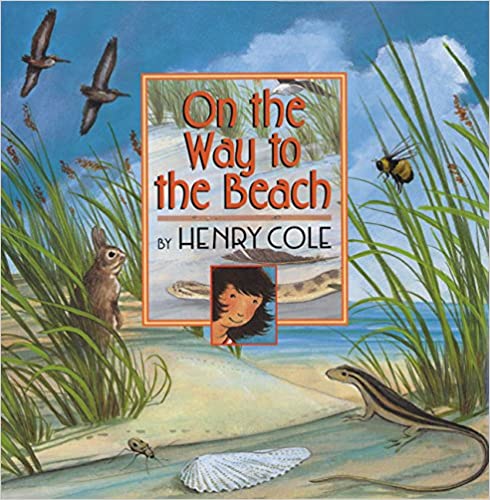
On the Way to the Beach by Henry Cole

Little readers will follow a young girl on a summer stroll to the beach.  As she walks, she passes through the woods, a marsh and sand dunes.  She often pauses to observe and think about the wildlife watching her. A foldout reveals animals, birds, insects and plants in each of the coastal settings---which is great for curious young minds!


Zigby Camps Out by Mr. Brian Patterson

Follow along as Zigby Zebra and his friends decide to campout in the deepest, darkest part of the jungle.  When Zigby and his pals get cold, hungry and scared they decide to pack it in, head home and eat dinner.  Zigby finishes his campout in the safety of his own backyard.  I'm sure Zigby's camping story rings true for many families who have "camped" for the first time.  


Blackout by John Rocco

One hot summer night in the city, all of the power goes out.  What is a family to do?  They can't use the phone, work on the computer, watch tv....or even finish cooking dinner.  John Rocco authors this lovely story about the pure joy in being fully present in the moment. 


Lucille Camps In by Kathryn Lasky

Poor Lucille is too young to go on the camping trip with her dad and older siblings, and she is NOT happy about it.  Lucille's mom tries everything to cheer her up, but nothing seems to work.....until Lucille gets an idea of her own!  Lucille and her mom are going to camp in!!  A delightful story about how your imagination can take you anywhere!!


Roller Coaster by Marla Frazee

Do you like riding a roller coaster, but hate the wait?  If so...check out this book, as it has all of the excitement without the dreaded long line!  This book is so fun to read aloud with sounds like clacking and yelling as the text loops and drops!  


And Then Comes Summer by Tom Brenner

This ode to summer will delight anyone who has ever counted down the days until school gets out.  Tom Brenner has a summer favorite for everyone in this book--flip flops, hide and seek, fireworks, ice cream trucks, lemonade stands and even roasting marshmallows! This book leaves little doubt that summer is a season like none other!


Are you looking for more great summer book reads?  Check out this list from PBS or Reading Rockets!

June 6, 2023

A Teacher's Summer Bucket List

My previous blog post was devoted to kids and what they want to do over the summer months.  

BUT.........

What about us?  What about teachers?  What about adults?  We DESERVE to make fun plans for ourselves too!!

Can I get an Amen?!?!

Every school year is taxing for educators, administration and support staff.....

Your summer break should be spent doing things that make you feel rested and recharged! 

All too often summer break seems to quickly slip through our fingers, and we arrive at the beginning of August and wonder how the new school year arrived so quickly?!?  

Summer is an elusive little season, isn't it? 

In order to take full advantage of your time off, I urge you to make a Summer Bucket list for yourself! 

Bucket lists are a great ways to ensure that relaxation, fun and meaningful moments happen. By the end of the summer I want to look back on the the two months and have something to show for it---and I want that for you too!  

Click here, or the image below to download this free resource!  Included in the download are multiple bucket list bingo boards.  There are two pre-filled bucket boards with lots of fun options!  You don't even have to think of your own fun--just print and start enjoying life.  Ha!  

There are also two boards that are mostly filled, but with a few blank spaces.  The mostly filled option is great if you have a few of your own ideas you want to insert! Last, there is  a completely blank board for those of you who have a brain swimming with fun ideas!


I truly hope you find this Summer Bucket List for Teachers helpful and that you have an opportunity to take these next few months to take time for yourself.


Summer is the perfect season to slow down, take a deep breath and breath fresh perspective into your life.  Remember that self care doesn't mean me first, it just means me too!  If you are looking or more ways to relax and take care of yourself click here or the image below!