Home Meet the Blogger Freebies Contact TeachersPayTeachers BlogLovin Instagram Pinterest Facebook Twitter Image Map
Showing posts with label writing. Show all posts

August 4, 2025

Multisensory Approaches to Teach Writing

 In our last post, we explored how vocabulary instruction becomes richer and stickier when students experience it with multiple senses. Today, we’re diving into something that often feels like a heavy lift for both students and teachers: writing.


Let’s be honest. Writing can be overwhelming. From thinking of an idea to spelling, grammar, sentence structure, and organization—it’s a lot to juggle. In fact, writing is one of the most cognitively demanding tasks we ask of students. Unlike speaking, which is often automatic and fluid, writing requires students to plan, organize, transcribe, revise, and monitor—all at the same time.  

 And yet, writing is not optional. Writing is how students show what they know, reflect on what they’ve learned, and make their thinking visible. “As Joan Sedita notes in The Writing Rope, writing requires ‘critical thinking and executive function skills,’ drawing on students' ability to think deeply about their subject matter.”


Yes, writing is complex and difficult, and that’s exactly why writing can’t be siloed into just one part of the day. The more opportunities students have to write—about what they’re learning, thinking, and discovering—the stronger and more fluent they become. Writing needs to live in every classroom, because it’s not just a way to demonstrate learning; it is a powerful tool for learning itself.

Whether it’s explaining a science experiment, arguing a historical perspective, or solving a math word problem, writing is central to deep learning in every subject. In fact, the National Commission on Writing once stated that “writing today is not a frill for the few, but an essential skill for the many.” Writing is a skill students need for life. 


Multisensory instruction is a game-changer for writing. It breaks the process into manageable parts and supports our students in creating writing that is both meaningful and confident. When we teach writing through seeing, hearing, touching, and movement, we activate more areas of the brain—and help ideas stick.


Multisensory Strategies to Support Writing


✍️ Pre-Writing with Purpose

  • Sketch It Out: Before writing, students draw their ideas. Visual planning helps with sequencing and organization.
  • Mind Mapping: Use color-coded graphic organizers to brainstorm. One color for main ideas, another for details.
  • Try using the OREO method to help students write a persuasive piece, or the Hamburger method to help students write a complete paragraph. 


🤠 Tactile & Kinesthetic Approaches

  • Sandpaper Letters or Tactile Words: Practice high-frequency or transition words using textured materials.
  • Air Writing: Practice tricky words or sentence starters by writing them large in the air while saying them aloud.

🎧 Talk Before You Write

  • Oral Rehearsal: Students verbally tell a partner what they plan to write. This step supports sentence structure and fluency.
  • Echo Sentences: Model a sentence aloud and have students repeat it using sentence stems.
  • Use sentence starters (pictured below) to assist students in talking before writing.

🌈 Color Coding for Structure

  • Use different colored pens or highlighters for different parts of a paragraph: topic sentence, details, transitions, and conclusion.
  • Use a peer editing checklist that assists students with proofreading their own (or a peer's) writing. Clear steps that utilize colors make the editing process easy and beneficial. 


🔧 Manipulate & Build Sentences

  • Sentence Strips: Have students build sentences with pre-written strips. Mix them up and reconstruct them.
  • Word Magnets: Use magnetic words on a board or cookie sheet to form complete thoughts.


When students can see it, say it, touch it, and try it in pieces, writing becomes possible—and even enjoyable. By making the invisible process of writing visible and tangible, we give students the tools and confidence they need to grow as thinkers, creators, and communicators across every subject.

Keep sparking those minds, educators!


November 13, 2023

Increasing Opportunities to Respond: Written Responses

Have you ever been at a staff meeting or professional development seminar where you (or some of your colleagues) were not paying attention?  Perhaps they were grading papers, texting, scrolling social media or having private conversations....


As we know all too well, kids are not a whole lot different than adults: if they aren't fully engaged in what is going on, they will find something else to absorb themselves in. 

I know all educators strive for maximum learning for all of their students, so we must avoid student disengagement at all costs!  One of the ways to do this is by increasing opportunities to respond (OTRs).

During a lesson students should have LOTS of opportunities to respond by saying, writing and doing! And by lots, I mean 3-5 OTRs per minute for simple responses (verbal or gestural) and 1 OTR per minute when the OTR is more complex (think solving a multi-step math problem) (MacSuga-Gage & Simonsen, 2015).

In my previous post I shared TEN ways students can engage in content in a verbal way.  You can find those posts by clicking here or here.   For this post, we will focus on ways students can respond to learning in a written way!  Keep reading for FIVE easy strategies that will get your students responding to content in written form. 


1. Quick Writes:

Encourage students to engage in brief, focused writing exercises, known as quick writes. Pose open-ended questions related to the lesson and give students a short time frame (e.g., 5 minutes) to express their thoughts. 

Quick writes serve as a low-pressure way for students to respond individually, promoting reflection and comprehension.


2. Think-Pair-Share with Writing:

Combine the traditional think-pair-share strategy with writing. After pondering a question individually, students pair up to discuss their thoughts and then collaboratively write a concise summary of their discussion. This approach not only enhances critical thinking skills but also encourages peer interaction.


3. Journals and Reflections:

Implement regular journaling or reflection sessions where students can express their thoughts on the material covered in class. Journals provide a personal space for students to connect with the content on a deeper level.

If your students struggle getting pen to paper, perhaps supporting their thoughts with sentence frames will do the trick. 


4. Interactive Note-Taking:

Transform note-taking into an interactive activity. Encourage students to annotate their notes, ask questions, and make connections to their own experiences. This method not only promotes active engagement during the lesson but also serves as a valuable reference for future review.

Interested in some specific note-taking strategies? Check out this easy WICK strategy from Edutopia. Or, take a look at downloadable graphic organizers from HMH or Thinkport.


5. Exit Tickets:

Use exit tickets as a writing tool for students to demonstrate their understanding of the day's lesson. Require them to summarize key concepts, ask questions, or share their opinions. This quick form of assessment helps both students and teachers gauge the effectiveness of the lesson.

Interested in a FREE exit ticket for comprehension?  Download the resource pictured below, by clicking here. 

When you incorporate written opportunities to respond in the classroom, you are enhancing student comprehension while contributing to the development of communication, critical thinking and collaboration.  Embracing the power of written expression truly empowers our students to deepen their educational journey!

If you are interested in deepening your knowledge about student engagement, check out How to Keep Kids Engaged in Class from Edutopia.  This is a great quick read with resources at the end! 


References

MacSuga-Gage, A. & Simonsen, B. (2015). Examining the effects of teacher directed opportunities to respond on student outcomes: A systematic review of the literature. Education and Treatment of Children, 38, 211-240.

May 29, 2023

Summer Bucket Lists for Students

My brain is already buzzing about what fun things I want to do this summer!  

Now, If I am thinking all of these summery things.... I know my students are thinking about it too! 


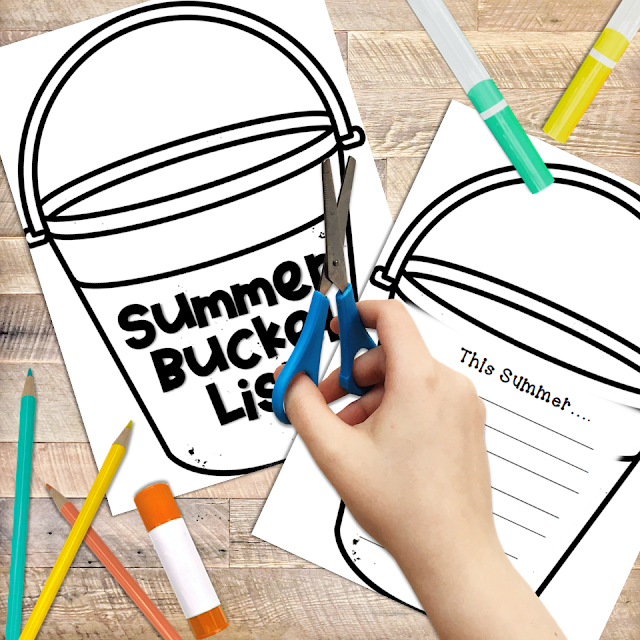
A great project to get your kids' sunny thoughts down on paper is to have them create a summer bucket list! 

I love this project as an end of the year capstone.  I double love it because it is easily adaptable to multiple ages and grade levels.  Click the image below to download it for FREE!!  


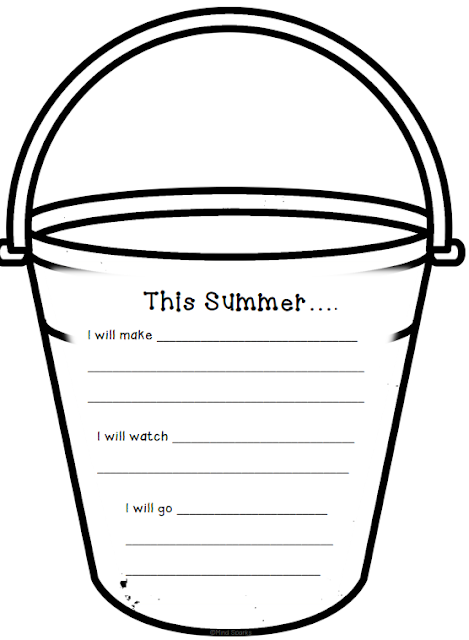
For beginning writers, use the buckets with sentence stems.  New writers simply have to fill in their thoughts! If you have a writer that really struggles, use an adult or fellow student to act as a scribe. 


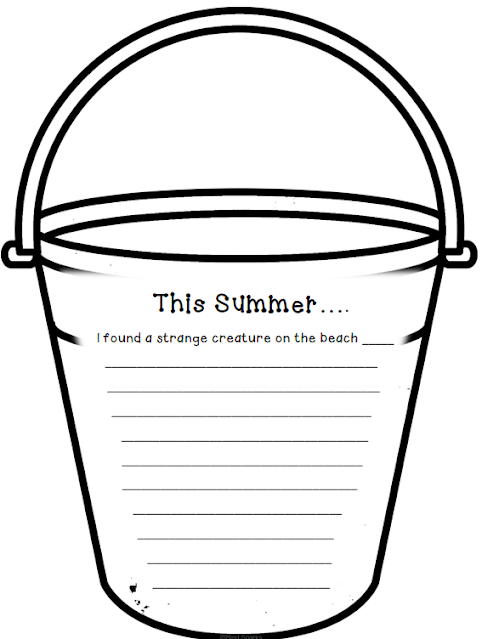
For older students, or students who love to be creative--try a bucket with a summer story starter.  You will be amazed at some of the creative stories students can come up with. 


Other buckets are just blank templates. These are designed with advanced writers in mind, as experienced writers do an excellent job of generating ideas, organizing their thoughts and getting it down on paper.

This activity is definitely one that you can use year after year!


Happy writing!


May 18, 2022

Start thinking those summery thoughts......

My brain is already buzzing about what fun things I want to do this summer!  

Now, If I am thinking all of these summery things.... I know my students are thinking about it too! 


A great project to get your kids' sunny thoughts down on paper is to have them create a summer bucket list! 

I love this project as an end of the year capstone.  I double love it because it is easily adaptable to multiple ages and grade levels.  Click the image below to download it for FREE!!  


For beginning writers, use the buckets with sentence stems.  New writers simply have to fill in their thoughts! If you have a writer that really struggles, use an adult or fellow student to act as a scribe. 


For older students, or students who love to be creative--try a bucket with a summer story starter.  You will be amazed at some of the creative stories students can come up with. 


 Other buckets are just blank templates. These are designed with advanced writers in mind, as experienced writers do an excellent job of generating ideas, organizing their thoughts and getting it down on paper.

This activity is definitely one that you can use year after year!


Happy writing!


April 20, 2022

Top 10 Poetry Activities To Use In Your Classroom

There are still a couple weeks left to celebrate National Poetry Month!  

Scroll through these ten ideas--I promise they are easy, fun and great ways to incorporate poetry into your classroom!

1. Poem of the Week

Select one poem to share with students for each week of the school year.  Each day spend a few minutes interacting with the selected poem.  Below is a sample schedule you may want to use.   

  • Monday--Read the poem to your students.  Have them echo read the poem back to you.
  • Tuesday--Add actions to the poem.  Choral read the poem as a class with the actions.
  • Wednesday--Pick a skill (rhyming words, adjectives, nouns, personification, etc.) and have students highlight those words in the poem.  Do a repeated reading with the poem. 
  • Thursday--Black Out Poetry.  Students black out several words in the poem, and input new words in.  Students read their "new poem" with a partner or several partners.
  • Friday--Quick Draw.  Echo, cloze, choral or partner read the poem several times.  Give students one minute to draw what they visualized. 
There are SO MANY additional ideas for activities to do with poems. If you are looking for more great ideas, check out this list from Edutopia or this list from Home School Resource Room. 

2. Write Poetry

Writing poetry really gives students a chance to let their creativity and imagination take center stage. A great way to introduce poetry writing is by using simple poetry that follows a pattern. Some great starter poems to get pencil to paper are acrostics and shape poems. 


Another helpful tool for writing poetry are poetry templates.  With poetry templates, students have example poems to help them create their own poetry!  Students just have to fill in the blanks!

If you are looking for more in-depth lessons on writing poetry with your students, check out this article from Scholastic. 


3. Poetry Read Aloud

Children love when they are read too, and reading poetry is no exception.  Kids of all ages can be thoroughly engaged and entertained when you share poetry. 

Check out this list of nine teacher recommended poetry books.  These compilations will be sure to delight all listeners.  


4. Poetry Performances

Supply each student with a poem, and have them rehearse and then perform the poem to the class (or a partner).  Some teachers like to get real fancy and have a poetry performance day complete with a red carpet, flowers on tables, a stage.....


5. Poetry Voices

Much like performing poetry, the teacher will provide each student with a poem.  The student will then rehearse the poem and then perform the poem to the class (or a partner) using a silly voice. 


6. Fluency Practice

Reading poetry aloud to students is great way to model fluent reading while building listening skills.  Poetry lends itself to many opportunities for expression, phrasing and smoothness.  Pick a favorite poem and have students choral or echo read as a class!

Let students pick a poem and have them do repeated readings or partner readings.  Rehearsing poetry is often a great motivator for students, as the text is often concise and rich with colorful and engaging language. 


7. Create a Class Book of Poetry

After spending time writing a variety of poems, allow each student to select his or her best work and create a "published" classroom book.  

For extra fun (and to brag about your class's awesome writing skills), allow each student to take the book home to share with their families!   


8. Listen to Poetry Performances

Have you heard about The Children's Poetry Archive?  It is a place where you can listen to poems read aloud!  They have a HUGE archive of poems organized by theme, grade level and even poets.

Also a simple search on YouTube can yield lots of results of poetry readings from celebrities to students.  Be sure to check out The Poetry Foundation, which has several video recordings of poetry performances.


9. Act Out a Poem

It is always great when we give kids a chance to get up and get moving.  Not only is it fun for kids, but movement helps reinforce learning.  So, why not pair poetry with movement?  

After multiple repeated readings and rehearsals have you students perform a poem in small groups, individually or with a partner.  For an extra level of fun, you could invite other classes or parents to watch the performances! 


10. Visualize a Poem

Visualizing is a powerful comprehension tool, and fun for kids to do!  Read a poem aloud, listen to a poetry performance or have students read a poem independently; and then have them draw what they pictured in their brain.  

I like to have students do "quick draw" where they only get 1 minute to draw the images they created in their mind.  Quick draws get 100% participation and they don't eat up a lot of instructional time!  

April 4, 2022

Time to Celebrate....it is National Poetry Month!


Happy National Poetry Month!

Inspired by Black History Month (February) and Woman's History Month (March) The Academy of American Poets launched National Poetry Month in April of 1996.  The goal for this celebration was (and continues to be) reminding the public that poetry matters!  

Over the past three decades, this event has become the largest literary celebration in the world! Tens of millions of readers participate each year and share in the joy that poetry brings to our lives!

To celebrate I am sharing nine books that will make perfect read alouds for your students!  Reading a few poems from the following books will definitely foster the love of poetry in young minds!


Judy Young remembers sharing one of her first poems with her grandmother at ten years old.  She has loved writing poems ever since!  This book uses delightful little poems to explain and highlight poetic tools, terms and techniques. Readers will surely be inspired into crafting their own poems after reading or listening to this text!


Animal Poems by Valerie Worth

Valerie Worth perfectly illuminates what makes each animal unique by the careful use of chosen words.  Readers will be delighted to read or hear these twenty-three exquisite poems, and view the breathtaking cut-paper illustrations by Steve Jenkins.


Lizards, frogs and Polliwogs by Douglas Florian

A great collection of poems about some fascinating animals!  Students will be be delighted when they learn about transparent glass frogs, ravenous rattlesnakes, stressed out skinks and sticky geckos!  This collection is informative, fun and hard to put down!


Where the Sidewalk Ends by Shel Silverstein

Shel Silverstein's name is synonymous with poetry.  Each collection he authored is abound with imagination and humor.  In this particular collection you will meet a boy who turns into a TV set and a girl who eats a whale! 


A Light in the Attic by Shel Silverstein

Open the pages to find another delightful collection of poems from Silverstein.  Inside you will discover Backward Bill, Sour Face Ann, the Meehoo with an Exactlywatt and the Polar Bear in the Frigidaire!


Falling Up Shel Silverstein 

Are you noticing a trend?  I can't help it....I LOVE Shel Silverstein! 

I mean...who doesn't love him?  In this compilation of poems, one will read My Nose Garden, Little House, Strange Restaurant, Sharing Noise Day and many more!


New Kid on The Block by Jack Prelutsky

This entertaining compilation of poems would make a wonderful introduction to the pleasures of poetry.  Jack Prelutsky is a master poet and makes word play in this collection incredibly entertaining!

In this book you will meet strange people such as Baloney Belly Billy and the Gloopy Gloopers.  You will also be introduced to jellyfish stew, a bouncing mouse, a ridiculous dog and a boneless chicken!  


Guess Who Haiku by Deanna Caswell

Kids will delight with this collection of haikus!  Each poem describes an animal and asks a question that rhymes with the answer on the following page.  What a wonderful interactive read aloud!


Sijo is a traditional form of Korean poetry.  Like the Japanese haiku, sijo is syllabic with three lines of 14 to 16 syllables each. The first two lines introduce the topic, the third and fourth develop the topic and the fifth and sixth lines contain a humorous or ironic twist.

Lind Sue Park illuminates funny an unexpected aspects of the everyday (breakfast, houseplants, tennis, washed socks, etc.) within the verses of this book. What a great read aloud to expose students to another form of poetry!


looking for more ideas to celebrate National Poetry Month with your students?  Check out these ideas and free resources from the Academy of American Poets. 


May 20, 2021

Summer Bucket List Flipbook **Freebie**

My brain is already buzzing about what fun things I want to do this summer!  

Now, If I am thinking all of these summery things.... I know my students are thinking about it too! 

A great project to get your kids sunny thoughts down on paper is to have them create a summer bucket list!  I love this project as an end of the year capstone.  I double love it because it is easily adaptable to multiple ages and grade levels.  Click the image below to download it for FREE!!  


Included in this freebie are:

  • Fill in the blank sentence stems--which are perfect for beginning writers.
  • Summer story starters--perfect for kids that have more experience with writing and love to be creative
  • Blank templates--great for advanced writers that do an excellent job of coming up with an idea, organizing their thoughts and getting it down on paper.
  • Instructions on how to assemble the Summer Bucket List Flipbook


This activity is definitely one that you can use year after year!

Happy writing!


November 4, 2020

Fall Craftivity & Creative Writing (Freebie)

Fall is my favorite season. 

I love the weather. The smells.  The colors. The FOOD!  The activities you get to do with your family.  I just love it all. :) 

There is just soooooooo much to be thankful for during this season of the year, which I love to highlight with my students when they do the Fall Favorite Things Craftivity. 

Not sure what a craftivity is?  Well.....it is a craft and activity combined into one...a craftivity!

For this craftivity, students take a leaf and divide it into multiple sections.  In each section they write something they are thankful for, or something they enjoy about fall. Then they draw a picture to represent each word.  See below for an example. :) 


If you want to extend this craftivity for more learning, you can have students write a paragraph describing their leaf and reasons why they chose the word they did.  The template below would be a great guide to help students organize their thoughts. 


If you are interested in completing this craftivity with your students, click here to download it for free!

Happy fall!


January 3, 2015

Paragraph Frames--Extended Version! (and a freebie)

I so excited to share my newest TPT product! 


This little gem is called Extended Paragraph Frames.....and here it is in all it's glory! ha!


These Extended Paragraph Frames are actually a jazzed up version of one of my more popular products-- Paragraph Writing Frames (text structure edition) and Paragraph Writing Frames (summarizing edition),


If you haven't heard about paragraph frames (sometimes they are also referred to as framed paragraphs)...you are missing out! Allow me to explain......

Paragraph Frames are perfect to support students who have difficulty writing strong paragraphs.  Framed paragraphs guide students (in any subject) by providing them with a sentence outline and transitional phrases.  Students simply have to fill in the blanks with their own thoughts!!  There is a great little article on paragraph frames on Reading Rockets....check it out by clicking here.   Below is an example of what a writing frame would look like...


I highly recommend using paragraph frames for the struggling or beginning writer!  They are super simple to use and can go with any text in any subject area--simply print off a frame and have a student fill in the blanks.  Once the student has completed the frame, he or she can transfer the frame to a piece of notebook paper---and voila....a strong paragraph!!  I have my paragraph frames laminated and hanging in my room.....and kids just grab them when they are ready to write!

Recently I have started pushing my students to further develop their writing.  They have the basics down, but I wanted them to cite textual evidence, offer insight and provide details.  I knew what I wanted---yet my struggling babies still needed some support.  Then one day I had a buyer request for me to  make a "more advanced version" of my frameser!!

And that little suggestion solved all my problems......I an push my students and make a happy buyer! GENIUS!  I have experienced so much success with basic paragraph frames---so I knew this would work!  Thus the Extended Paragraph Frames were born!

Click here to download an extended paragraph frame freebie! (or click picture!)


Just in case you were wondering how extended paragraph frames are different than regular paragraph frames......well....here ya go!


Extended paragraph frames will:
  • lengthen students sentences
  • demonstrate how to cite textual evidence
  • provide students with a way to be more descriptive
  • encourage students to ad their own insight, understanding and opinions
I hope you all enjoy the freebie....and happy writing!


May 5, 2014

Giveaway and Sale-----Happy Teacher's Appreciation Week!!!

Happy Teacher Appreciation Week to all of the amazing educators out there!  I pray that each and every one of you feel the love this week, because gosh darn it----YOU DESERVE IT!!!

To show my gratitude I joined up with TPT and put my entire store on sale!!  The TpT [loves] Teachers Sale will run from May 6th (that is tomorrow!!) until May 7th!! Just so you know.......I have heard the bulk of sellers are participating in this sale....so it is a great time to stock up on some of your wishlist items!! 


Additionally, I am participating in a GREAT giveaway hosted by Teaching in Blue Jeans.


Amy, the sweetheart she is, wanted to put together a giveaway in honor of Teacher Appreciation Week....and a boy did she get a lot of participation.  Over 100 sellers have donated items!  That's how much teachers love other teachers!!!! 

I donated my best selling item---Persuasive Writing O.R.E.O---so enter for your chance to win!!!  The giveaway runs from Monday (today) until Sunday night.  Best of luck!!!