Home Meet the Blogger Freebies Contact TeachersPayTeachers BlogLovin Instagram Pinterest Facebook Twitter Image Map

August 5, 2024

An Educator's Guide for Implementing Multisensory Instruction in the Classroom

Using multisensory methods during your instruction has many benefits!  If you aren't sure what those benefits are, check out this blog post.   Prepare to be amazed and motivated!

Once you understand the advantages of engaging multiple senses during instruction, you immediately start asking yourself the question of how?!?

How do I make my instructional delivery multisensory? 

Read on teacher friends......


Not every lesson HAS to include ALL of the senses, but it is important for teachers to be intentional about planning more than one way for students to engage in the learning.  In fact, research consistently supports the efficacy of multisensory techniques.  This efficacy is particularly true for young learners and those with learning disabilities, such as dyslexia.

 
Studies have shown that when children are taught using multisensory strategies, they exhibit significant improvements in reading skills, phonemic awareness, and overall academic performance (Campbell, Helf, & Cooke, 2008; Snowling & Hulme, 2011).

Below are instructional examples for each of the senses that you may wish to include during your instruction.  Try to incorporate two to three senses in each lesson!


Examples: 

  • Visual aids (i.e. charts, diagrams, posters, graphs, maps, pictures, comic strips)
  • Videos to reinforce concepts
  • Text and/or pictures on paper 
  • Models
  • Color for highlighting
  • Flash cards with pictures
  • Graphic organizers 
  • Outlining passages
  • Visualization games and exercises
  • Timelines with symbols and images
  • Student created art, images, text, pictures, collages, power point presentations, photo essays, videos, graphs
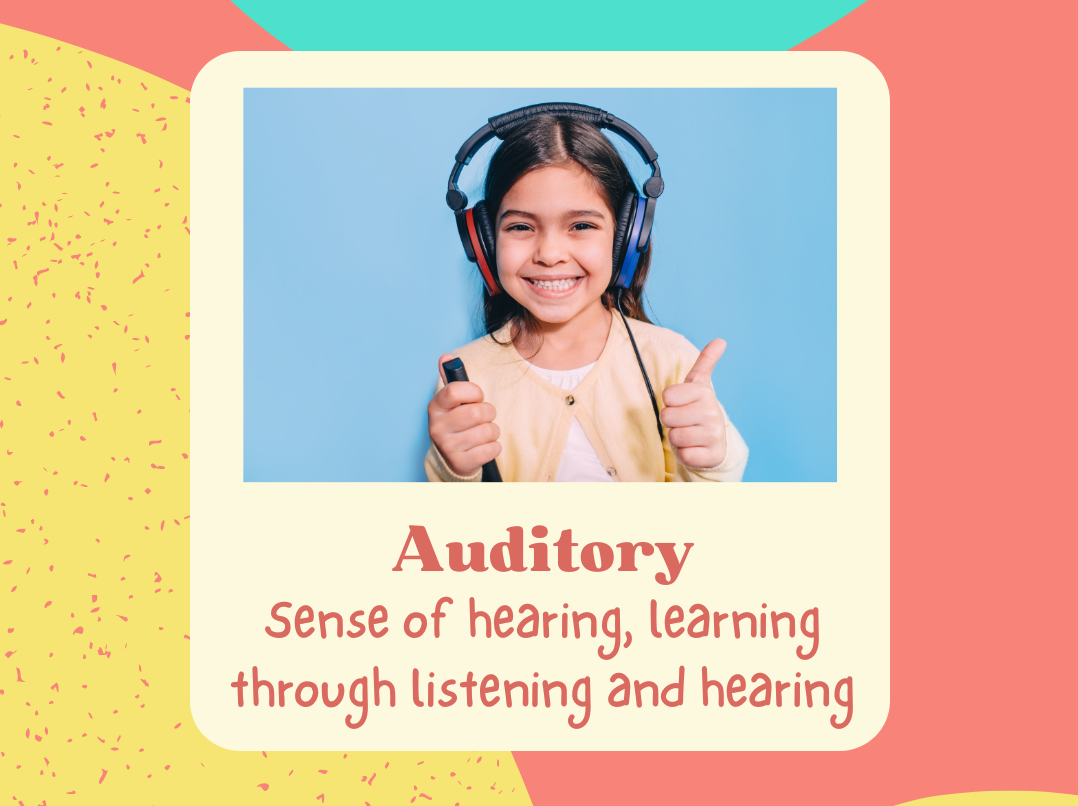

Examples:

  • Auditory cues through discussions, lectures, and audio recordings
  • Books on tape
  • Podcasts
  • Peer assisted reading
  • Paired reading
  • Computerized text readers
  • Video 
  • Music (song, instruments)
  • Speaking (rhymes, chants, and language games)
  • Performances (skits, role plays, panel discussions, interviews, poetry recitals, teaching a lesson)


Examples:

  • Air writing (spelling words with large movements in the air)
  • Hands-on activities
  • Experiments
  • Interactive simulations that allow students to physically engage
  • Games involving movements paired with activities (i.e. clapping while, jumping while spelling, tapping while sounding out words)  
  • Any large movement (activity involving dancing, bean bag tossing, rhythmic recall, etc.)
  • Academic competitions such as quizzes, flash card races 
  • Role plays
  • Demonstrations
  • Field trips
  • Labs
  • Weighing & measuring
  • Skill demonstrations (i.e. cooking, musical performances, drama, simulations, treasure hunts, dance, charades)


Examples:

  • Tracing shapes, letters, words on a textured surface (sand tray, sand paper, raised lined paper, rice trays, fabric, textured letters/numbers, etc.)
  • Tapping the sounds in words
  • Modeling materials (clay and sculpting materials)
  • Desktop whiteboards and colored markers.
  • Flip cards on metal rings
  • Magnetic boards and magnetic words/letters/images
  • Board games
  • Puzzles
  • Experiments
  • Manipulative materials to demonstrate number values and math concepts (coins, blocks, sticks, base ten blocks, tangrams, etc.) 

Please note this is not an exhaustive list and there are many additional ideas not listed.   

The BIG takeaway is multisensory instruction not only enhances engagement but also fosters academic success for students.  When you intentionally plan for sensory integration in your lessons, you are setting your students up for an opportunity to thrive academically, socially and emotionally! 


If you are looking for some great ways to engage students check out Silly Voice Cards or Roll, Read and Color!  


Silly voice cards are great for infusing multisensory into fluency practice!  Students can randomly draw (or you can select) a silly voice card and then re-read text, poems, lyrics or chants using the selected silly voice.  Not only do kids love these cards but they are engaging visual and auditory senses at the same time!


Roll, Read and Color is a great resource to supplement an explicit and systematic phonics curriculum.  This meaningful activity has students engaging in visual, auditory, kinesthetic and tactile senses while they practice taught phonics skills!  Whoop!


July 9, 2024

What are the Benefits of Multisensory Instruction?

Multisensory instruction is not a new concept, but has been gaining traction and renewed focus in recent years due to its effectiveness in enhancing learning.

Research indicates when teachers present information in multiple sensory modalities (such as sight, sound, touch, smell, taste or movement) comprehension and retention of information is significantly improved! 

There are SO MANY benefits to implementing multisensory instruction, but I've narrowed down to the top three below! 


1. Using multisensory instruction has a profound impact on memory and knowledge retention 


In 2008 two professors (Landan Shams from UCLA and Aaron Seitz from UCR) hypothesized that because our experience in the world involves constant multisensory stimulation, it is likely that the human brain has evolved to develop, learn and operate optimally in a multisensory environment. 

Their hypothesis was right!  Shams and Seitz (2008) found that multisensory learning enhances the brain's ability to process and recall information.  

More specifically, when educators engage students' brains with multiple senses, stronger and more complex neural connections are created.  These strong connections make it easier for students to retrieve information when needed.


2. Multisensory instruction can be particularly beneficial for students with dyslexia and other learning disabilities 


All kids benefit from multisensory instruction, however engaging multiple senses is particularly beneficial for students with learning disabilities.  For example, students who struggle with an auditory processing disorder may have a difficult time with learning via lectures.  Providing students with multiple ways to connect with what they are learning makes it easier for kids to:

      • collect information
      • retain knowledge 
      • make connections between new and known information
      • understand and work through problems
      • use nonverbal problem solving skills 

The International Dyslexia Association highly recommends using the Orton-Gillingham approach when teaching reading.  The Orton-Gillingham approach is a well-known multisensory instructional method, has been extensively researched and proven effective for teaching reading to individuals with dyslexia.

 The success of this approach lies in its structured, explicit, and multisensory nature, which helps students better understand and retain reading skills by reinforcing learning through multiple sensory pathways. 


3. Multisensory instruction can enhance student engagement and motivation


When lessons are dynamic and involve various senses, students are more likely to stay focused and participate actively. A study by Albers and Sanders (2010) demonstrated that multisensory activities could increase student engagement and reduce disruptive behavior in the classroom.

By making learning an interactive and enjoyable experience, multisensory instruction not only supports academic achievement but also fosters a positive attitude towards learning!

It's a great feeling when you know you've crushed your instructional delivery.  Witnessing high engagement and excitement from students is immensely satisfying and doesn't happen by accident!  As educators, we must ensure that we always plan various ways for students to connect with the information we are presenting them.


To sum it up, multisensory instruction benefits ALL students academically, socially and emotionally. 

What teacher doesn't want that?!?

If you are looking for some great ways to engage students check out Slap Words!


Slap Words is a fun and engaging game to review various concepts with students.  The best part is they don't even know they are reviewing because they are having so much fun!  This game has students engaged in visual, auditory and kinesthetic senses!

June 24, 2024

What is Multisensory Instruction?

Multisensory instruction, sometimes called multimodal instruction, is a teaching approach that engages more than one sense, or modality, at a time.  

When teachers utilize different sensory pathways (sight, sound, touch, taste and smell) they are creating robust and memorable learning experiences for their students.  

What teacher doesn't want that?!?......


What might engaging multiple senses actually look like in the classroom?!?

Well, let's take this example of lesson utilizing a multi-sensory approach to teaching weather vocabulary for early elementary students.\

  • First, the lesson might begin with a video showcasing different weather conditions, accompanied by relevant sounds.
    • Senses utilized: sight & sound

  • Next, students practice pronunciation through repetition and listening exercises.  The teacher writes the vocabulary term on the board and has students repeat the word.  The teacher could also break the word into syllables, talk about morphemes, etc.
    • Senses utilized: sight, sound, speaking

  • Then, students match picture cards with taught weather words (whole group or small group)
    • Senses utilized: sight, touch, listening and speaking

  • Finally, students participate in a lively game of weather charades to embody each term
    • Senses utilized: movement, listening, speaking

Optional activities might have students exploring tactile materials representing weather textures (i.e. cotton for clouds and sandpaper for sunny days, ice cubes for cold weather, etc.), or students could create their own images, actions or sounds for each weather term. 


Not every lesson HAS to include ALL of the senses, but it is important for teachers to plan more than one way for students to engage in the learning.  In fact, research consistently supports the efficacy of multisensory techniques.  This efficacy is particularly true for young learners and those with learning disabilities, such as dyslexia. 

Studies have shown that when children are taught using multisensory strategies, they exhibit significant improvements in reading skills, phonemic awareness, and overall academic performance (Campbell, Helf, & Cooke, 2008; Snowling & Hulme, 2011).

Follow along with this blog series where we will explore the benefits of multi-sensory instruction, how to implement this technique, what to avoid and the best resources to use!

In the meantime, if you are looking for more information check out Understood's website! 


March 25, 2024

🌸 5 Teacher Recommended Books to Welcome Spring 🌸

Peace out winter, hello spring!


I love spring as it brings with it a sense of renewal and growth. It is a
perfect time for educators to refresh their teaching practices and inspire their students in the home-stretch of the school year.

One great way to to infuse your classroom with the spirit of spring is by carefully selecting books that can serve as your guiding light. Check out this list of essential spring reads for educators!


"Miss Rumphius" by Barbara Cooney (Prek-2nd):


  1. A timeless classic, "Miss Rumphius" tells the story of Alice, who sets out to make the world more beautiful. Through vibrant illustrations and poignant storytelling, Barbara Cooney's masterpiece inspires educators and students alike to embrace the transformative power of kindness and stewardship—a perfect theme for springtime reflection.


  1. "Up in the Garden and Down in the Dirt" by Kate Messner (Author) and Christopher Silas Neal (Illustrator) (Prek-K):


  1. Delve into the intricate world of gardening with this captivating picture book. "Up in the Garden and Down in the Dirt" takes readers on a journey beneath the soil and above the ground, exploring the interconnectedness of life in a garden throughout the seasons. Educators can use this book to spark discussions on ecosystems, life cycles, and the importance of environmental stewardship.


  1. Celebrate the legacy of environmental pioneer Rachel Carson with this inspiring biography. "Spring After Spring" chronicles Carson's journey from a nature-loving child to a groundbreaking scientist and author whose work catalyzed the modern environmental movement. Educators can use this book to introduce students to the power of curiosity, advocacy, and the impact of one person's dedication to protecting the planet.


  1. "The Curious Garden" by Peter Brown (Prek-1st):


  1. Immerse your students in the enchanting world of "The Curious Garden," where a lone gardener transforms a dreary cityscape into a thriving urban oasis. Peter Brown's whimsical tale celebrates the joy of discovery, community collaboration, and the transformative potential of nature. Educators can ignite students' imagination and curiosity by exploring themes of urban greening, biodiversity, and sustainability.


  1. "Planting a Rainbow" by Lois Ehlert (PreK-K):


  1. Bursting with vibrant colors and lyrical prose, "Planting a Rainbow" is a delightful exploration of the gardening process from seed to bloom. Lois Ehlert's enchanting illustrations and simple text provide educators with a valuable resource for teaching young learners about plant life cycles, color identification, and the joys of gardening.


For more books to celebrate spring check out this list from We are Teachers or PBS Kids!


January 22, 2024

Top 3 Mistakes Teachers Make Utilizing Opportunities to Respond

When teachers utilize opportunities to respond (OTRs) in their classroom students achieve at higher levels, process information deeply and retain knowledge more effectively.   


OTRs is a teaching technique that encourages student participation and engagement for all students.  There are three types of OTRs teachers can use---getting kids to say things, write things and do things.

Despite its potential benefits, however, there are common mistakes that educators might inadvertently make when implementing OTR strategies. Let's explore some of these mistakes, so we can avoid them! 


Mistake 1: Limited Variation in Question Types


Research has consistently emphasized the importance of varying question types to cater to diverse learning styles and abilities. Unfortunately, some teachers might fall into the trap of using a limited set of question types, such as closed-ended questions that require only brief responses. 

To enhance student engagement, educators should diversify their questioning techniques, incorporating open-ended questions, probing queries, and reflective prompts.

Check out some of these video examples from The Classroom Check-Up!

Or, checkout these Blooms Taxonomy Question Cards which have over 8 pages of question prompts to ask your students!


Mistake 2: Unequal Student Participation


In many classrooms, certain students may dominate discussions while others remain silent. This uneven distribution of participation can hinder a collaborative learning environment. Teachers may unintentionally contribute to this dynamic by consistently directing questions to a select group of students.

Check out this article from Edutopia which gives some GREAT ideas on how to get ALL students participating! 

Response cards, Hold Ups and Response Mats are another great tool to get every student engaged.  Check out this robust package for under four dollars!  Or, download the freebie mat by clicking here. 


Mistake 3: Insufficient Wait Time


Wait time, is a critical factor in increasing student achievement. Some educators, however, may inadvertently provide insufficient wait time, hindering students' ability to formulate thoughtful responses.  

In fact, on average, most teachers only provide approximately 1 second of wait time between asking a question and allowing a student to respond.


Decades of research, which can be found here, support that teachers should allow 3-5 seconds of wait time after a question is asked AND after a student has responded.  


Allowing 3-5 seconds of wait time promotes LOTS of positive outcomes for students including:
  • increasing the length of student responses
  • increasing the number of unsolicited appropriate responses
  • increasing responses from students categorized as low performing
  • increasing student to student interactions
  • increases in student achievement 
  • more thoughtful and contemplative answers
  • decreases in students not responding or saying, "I don't know." 
  • decreases in discipline problems

Opportunities to respond are powerful tools that can enhance student engagement, critical thinking, and overall learning experiences. By being mindful of common mistakes, teachers can harness the full potential of OTR strategies. 


January 5, 2024

Increasing Opportunities to Respond Using Physical Movement

In today's educational landscape--fostering student engagement is crucial for effective learning. Read about what the research says by clicking here .

One powerful strategy educators can employ is increasing opportunities to respond (OTRs).  OTRs refer to moments when students actively engage with material you are teaching.  Students can engage by writing, saying, or doing.  

Research suggest that increasing OTRs is linked to higher levels of students achievement, as it allows learners to process information deeply and retain knowledge more effectively. 


In previous posts I shared TEN ways students can engage in content in a verbal way and FIVE ways students can respond to taught material in a written way. Find those posts by clicking here or here!  For this post we will focus on ways students can interact with the content by doing--kinesthetic learning!  

Physical movement can be a powerful tool for understanding and retaining information.  Incorporating gestures and whole body movement into the learning experience taps into multiple senses, reinforcing neural connections and making learning more memorable.  Keep reading for FIVE easy strategies that will get your students responding to content in a physical way!


1. Interactive Learning Games:


Introduce games that require physical movement to reinforce learning objectives.  For example use a game of charades to review vocabulary or act out historical events!  

I have been playing the game Quick Draw  with my students for YEARS.  This is a great game to review or introduce vocabulary terms, words on a word wall or even spelling words! 

Quick Draw requires virtually no prep and the materials needed are in almost every classroom.  

Here's how you play:
  1. Determine the list of words you want to introduce or review
  2. Provide each student with a marker board
  3. Provide each student with a dry erase marker 
  4. Shout (okay maybe not shout...but say) the word aloud to students
  5. Give students 30 seconds to illustrate the word
  6. Say, "3.....2.....1....show me!" and every student MUST hold up their illustration (if they are still drawing I give them a warning, and tell them they get paper pencil next time)
  7. Select a couple of students to explain their drawing to the class; or have them turn and talk about their drawing with a neighbor


Looking for ideas? Check out this blog post, which is filled with games to implement in your classroom!


  1. 2. Role Playing Exercises:


    Allow students to transform into characters or concepts through role-playing. This approach increases engagement AND provides a deeper understanding of material. Reader's Theater is a great way to incorporate role playing into the classroom!

  1. 3. Choreographed Mnemonics:


  2. Create simple choreographed movements or gestures associated with key concepts or facts.  Students can perform these movements as a group, reinforcing the information through physical repetition.  Check out this video from EL Education--lots of great ideas for how to incorporate movement into your classroom!


4. Hand Signals :


Try using hand signals during instruction to gauge students understanding of the content being taught.  A few examples are: 
  • Fist to five: students rate their level of understanding using a 0 to 5 scale 
  • Thumbs up and Thumbs down
  • Pointing to the correct answer (i.e. point to the right if, point to the left if, point on your paper to the correct answer, etc.)
  • Fingers as a number: with your fingers show me the correct number choice....

  1. 5. Response Cards:


Have student engage with the content by holding up response cards.  If response cards are too messy to organize--try using a response mat where students use a a paperclip or some sort of marking device to mark their cards. Response cards and response mats (also called hold ups and student participation cards) are great ways to gauge students understanding and get them interacting with taught concepts. Some examples of cards you could use are:

  • true/false
  • thumbs up and thumbs down
  • red and green
  • numbered
  • lettered

Click here or the image below to get your hands on this FREEBIE student response mat!


Or, if you are looking for a more robust package of response cards, hold ups and mats check out this product by clicking here, or the image below.  For under four dollars, you will have NINETEEN different ways students can respond to the content you are teaching.  WOW!!