Home Meet the Blogger Freebies Contact TeachersPayTeachers BlogLovin Instagram Pinterest Facebook Twitter Image Map

January 29, 2021

All About Word Sorts Post 5: Resources

We have made it to the end of the series All About Word Sorts.  Whoop whoop!


Thank you for hanging in their with me.....I sure hope you learned some along the way, or gave yourself a pat on the back for what you already do in the classroom.

If you haven't had a chance to read the previous posts--don't worry--you still have time!  Just click the links below for the titles that are of interest to you.

Post 1: The "why" behind using word sorts. 
Post 2: 15 activities to do with your word sorts
Post 3: Instructional routines for word sorts
Post 4: How to assess word work

For this last post I want to focus on various resources you can use for word sorts.   I have recently created sort packs for short vowels, beginning blends, ending blends and digraphs.  These packs are super easy to use -- just print and go!  

In addition to easy prep--there are LOTS of opportunities for differentiation.  The word sort packs have three levels of word sorts--which is perfect for the diverse academic ranges present in all of our classrooms.  
  • Level 1: Picture sorts (no words--just focusing on the sounds in the words). This level is great for struggling students or for early readers and pre-readers.
  • Level 2: Short vowel and one syllable words.  This level is perfect for struggling students or early readers.
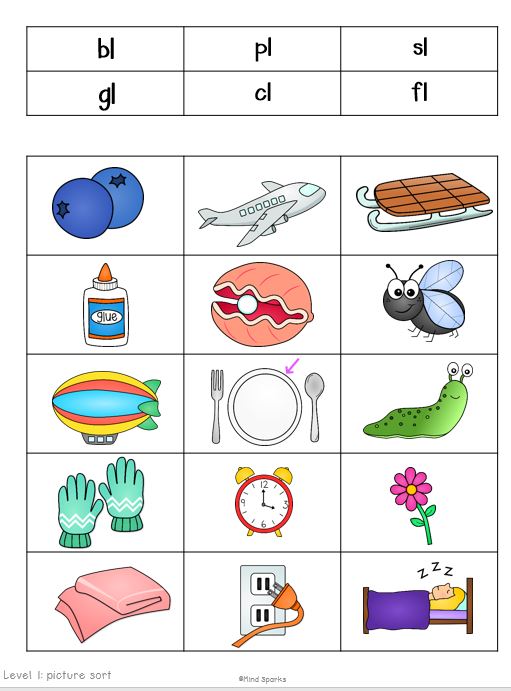
  • Level 3: Advanced vowels and multi-syllabic words. This level is ideal for advanced readers or for enrichment. 


Along with differentiation opportunities, the word sort packs also have a variety of word sort activities.  There are cut and glue sorts, regular sorts (cut and sort by hand) and sort and write.  The sort and write activities have lined and unlined options.  Typically each pack has over 30 sorts for you to choose from. That is A LOT of sorting options!  

I am continually adding to the sorts and have plans for sorts in all areas of the phonics continuum.  So, stay tuned for: silent e, predictable vowel teams, unpredictable vowel teams, r-control, trigraphs, hard and soft c and g, syllable types, and meaning based sorts. 

Other resources I use, but are a bit more expensive are:

Words Their Way.  Pictured below is the letter and picture sort book, but there are multiple that can be purchased from Pearson.  The books range from sorts for pre-k to syllable and affix spellers.  Recently Pearson has also added vocabulary sorts to their series, along with sorts for struggling readers, writers and spellers.  


All Sorts of Sorts: Word Sorts that Reinforce Spelling and Phonetic Patterns. This book was published in 2008 (I know...I know...that is a while back), BUT it is full of great sorts!  My copy is well worn and well loved. :) 

January 18, 2021

All About Word Sorts Part 4: Assessments

Welcome to post four in the all about word sort series.  Today we will focus on assessments and how we can determine if our students are mastering word patterns.

If you are interested in the "why" behind word sorts, make sure to read the first post in this series by clicking here.  Are you curious what types of sorts there are?  Then, make sure to read post two in the series which describes 15 different ways to sort words!  You can read post two by clicking here. The third post covers word work instructional routines.  You can read that post by clicking here

As with all instruction it is important to assess and check the understanding of students.  Word work is no exception.  After students have been directly instructed in a spelling pattern and have had multiple opportunities to explore the pattern, it is important to determine if students have mastered this new knowledge.  Are the students able to apply the pattern to tasks of spelling and reading?

To answer these questions about my students, I assess them in two ways: formative and summative.

Formative assessments happen every time students explore words.  As the students sort and read the words--I observe, take note and provide feedback.  In fact any time the students are sorting (speed sorts, blind sorts, partner sorts, written sorts, open sorts, etc.) I am observing, making notes and providing feedback.  

Feedback is key for the students, as this is the way students clear up misconceptions and begin to master their newfound knowledge.  Notetaking is key for me, as this is how I keep track of how my students are progessing and what my next steps in instruction will be.    

As students are sorting, I ask questions like: 

"Explain why you put ____ word in this category."

"What vowel sound do all of these words have?" 

"What do all of these words have in common"

"This is an oddball word, can you tell me why?"

"This word doesn't seem to match the others, can you fix it for me?"

"Could you sort these words in another way?"

"How do you know that word goes there?" 

The answers the students provide helps me with my notetaking (are they really understanding what they are doing?) and it helps cement the knowledge for the students.  Having students justify there thinking is so powerful!

Summative assessments happen after the students have had ample opportunity to explore words.  I simply give students a blank sheet of paper and call 5-10 words (depending on age) to the students.  These words are not the words they use during word exploration, BUT words that use the same pattern.  My mastery level is 80%.  If students score 80% or higher on their summative assessment, I progress them to the next skill. 

Another assessment that works jointly with word sorts is the Spelling Inventory by Pearson.  The Spelling Inventory is an assessment that provides an instructional spelling stage of a student.  A primary (k-3) and upper elementary (3rd grade through adulthood) are available depending on the age of your students.  You can download a copy by clicking here.


The objective of the spelling inventory is to pinpoint what spelling stage your child is at. Once you have the stage pinpointed, you are able to begin your instruction.  The Spelling Inventory works hand and hand with Words Their Way, but even if you don't have that resource you can still get an idea of where your child is at.

This Reading Mama does a great job explaining how to administer and score the spelling inventory.  

January 5, 2021

All About Word Sorts Part 3: Instructional Routines

Welcome to post three in the all about word sort series.  This post will focus on the instructional routine I use with my students when sorting words. This is the "what" students do with their word sorts.  

If you are interested in the "why" behind word sorts, make sure to read the first post in this series by clicking here.  Are you curious what types of sorts there are?  Then, make sure to read post two in the series which describes 15 different ways to sort words!  You can read post two by clicking here

My instructional routine for word sorts is predictable.  I love having a prescribed way of doing things that allows learning to move forward in a structured and predictable manner.   Routines are great--as they help students learn as efficiently as possible!  Below is the word sort routine my small reading groups follow.  


Day 1--Cut and sort the words.  Direct instruction is given on the pattern of the sort.  Students also highlight the pattern in each word on their sort

Day 2-- Sort the words and write them.  Students typically have a word work notebook they use, but writing the words can be easily done with a piece of paper and pencil.

Day 3-- Open sort the words.  Students sort their words any way they wish.  All options are open, as long as the student is able to explain the way he/she sorted.  Illustrate the words.

Day 4-- Speed sort (timed sort). Students sort the words as fast as they can.  For extra fun, students keep track of their time and then try to beat their time.

Day 5--Blind sort or game.  Students work with a partner.  Headers are placed at the top of the page.  Partner A picks up a word and reads it aloud.  Partner B tries to correctly write the word in the correct category.  Partner A checks Partner B's work. 

Day 6-- Transfer test.  A test is orally given by the teacher.  If the student has 80% accuracy on the assessment, he/she is able to progress to the next sort.  If a student does not achieve 80% mastery, they cycle through the routine again.    


Within my small reading groups, I devote about 5-8 minutes to word sorts a day or about 25 minutes per week.  I only have students for thirty minutes total a day--so other instructional items fill our time slot.  According to research from literacy professor Donald R. Bear, teachers should spend 15-20 minutes introducing a sort and then 10-15 minutes per day with subsequent word sort activities. When I was a full time classroom teacher, I devoted about 20 minutes per day to word work.

My instructional routine works for me and my students, but there are lots of routines out there.  Check out what these other teacher authors do: 

A Teacher's Guide to Words Their Way by Second Story Window

Words Their Way the 5 Day Plan by Big Time Literacy

Word Study Routine by Tarheel State Teacher


December 30, 2020

What will be YOUR word for 2021?

Have you picked a word of the year before?

This will be my first year doing so, and I love the simplicity of choosing one word to help steer my goals for the year.  Instead of selecting multiple specific goals to try and achieve, I will be choosing one word that will be present at the forefront of my mind.  This word will be a word that is overarching, allowing smaller goals and accomplishments to fit within it.  

So....what is my word? 

I am selecting the word open.

I want my mind to be open to taking risks professionally.  I want to be open to trying new things and receiving advice.     

I want my heart to be open to forgiveness.  I want to move on from hurt and heartache, and push forward to a happier future.

I want to be open in every situation.  Be truly present.  Enjoy every moment without distraction. 

Need help selecting a word of the year? Check out this post from blogger Elizabeth McKnight.  She gives some great inspirational word examples and a more in-depth explanation on the benefits of choosing one word to guide your focus.   

What will be your word?  I would love if you would share!

Have a happy new year!  Stay safe and healthy!

December 17, 2020

8 Virtual Holiday Classroom Party Ideas


Tomorrow is the last day with kids (remotely) before we depart for our winter break.  Typically, when our learning mode is in-person, it is a day filled with Christmas caroling (other school's visit us), holiday sing-a-longs, festive art projects, seasonal games, yummy treats....ohhhh and a splash of learning (Ha!).  I sure am going to miss the sights, sounds and smells this year....

Since school began, we have been hitting the ground running.  When our district switched to fully remote, we didn't take our foot off the gas of academics.  We have been teaching, teaching, teaching......so I think it is high time I gave my students a little break.  Tomorrow I plan to spend some of our zoom times doing something a little merry!  

Check out the ideas below (that require little to no prep), if you want to plan something merry too! 

1. Directed Drawings: Share your screen and play a video that walks students (step by step) on how to draw seasonal sights.  Some of my favorite directed drawings are by Whimsy Workshop Teaching  and One Fab Teacher

2. Zoom in/Zoom Out Game: Create a Powerpoint or Google Slides presentation of various festive images.  Share your screen zoomed really far in on the image.  Gradually zoom out and have students guess what the image is. 

3. Charades: Send students a private message in Zoom, and have them act out a holiday item, movie or song!

4. Pictionary: Send students a private message in Zoom, and have them draw a holiday item, movie or song.  Students could use the whiteboard feature on zoom, or just grab a piece of paper and pencil!.

5. Read-A-Louds: Who doesn't love a good story read aloud to them?  Pick one of your favorite holiday books and share it with your class.  If you don't have any good holiday books on hand, check out Storyline Online which has celebrities read popular book titles.  There are some great holiday books on their website!  You can also find A LOT of read alouds on YouTube!


6. Christmas Movies:  Share your screen and play a quick Chirstmas cartoon or short movie!  There are lots of great options on multiple streaming sites.  Make sure to not violate any copyright laws! :) 

7. Holiday snack time:  Have students bring their favorite snack or drink to the zoom.  Or maybe you want it to be more specific, like a popcorn party.  Maybe a hot cocoa party?  Munching while working is always fun!

8. Scavenger Hunt: This idea is a bit more engaging and interactive, but also super easy!  Create a list of household items most students would have in their homes.  During your zoom class call or show an item on the screen to see who can find it the fastest.  You can show/say the items one at a time, or give them the whole list all at once. 

While I know these ideas aren't the holiday party we all want or are used to, they are still fun and memorable for the kids.  So enjoy your time and Merry Christmas! 


December 7, 2020

Classroom Christmas Gifts

Each year I get my kiddos a little something for Christmas. I keep it small and affordable--because, let's face it--buying gifts for 25+ kids can get expensive!

In past years I have made Rudolph suckers. They are adorable--and cheap!  If you want the full set of directions on how to make them, click here.  


I have also had a hot cocoa party with lots of toppings.  We sipped this delicious treat while we watched a Christmas movie.  

I know, I know....watching a movie in school is a big loss of instructional time...but it was tasty and fun! :)  If you are looking for a good hot cocoa recipe that can be made in a crock pot, click here


This year I am struggling with ideas, as we will more than likely be fully remote.  I was thinking of doing a dress up day (dress like an elf, in Christmas colors, ugly sweater, etc.).  Or perhaps, we will do a virtual sing along?!?

How do you plan to celebrate Christmas with you class this year if you are fully remote?  


December 3, 2020

All About Word Sorts Part 2: Types of Sorts

Welcome to post two in the All About Word Sorts series. :)  Today I will describe the many types of sorts you can have your students complete!  

But...before I get to that, if you are interested in the "why" behind using sorts, make sure you check out post one by clicking here.  


Below are 13 different sorts you can have your students complete with their list of words.  If you are unsure what words to include in a word sort, you can administer a spelling inventory to the student to determine what encoding level they are at.  Or, you could pair your word list with the phonics concept you are teaching to your class. Word lists don't have to be limited to a phonics skill--they could also be organized around vocabulary or grammar. 

1. Closed Sort (regular sort): Students sort their words by a specific spelling pattern determined by the teacher.  Words could also be sorted by meaning. 

2. Open Sort (alternate sort): Students sort their words any way they wish.  All options are open, as long as the student is able to explain they way he/she sorted.

3. Buddy Sort (partner sort): The student selects a partner.  Both partners work together to sort the words.  

4. Blind Sort: Students work with a partner.  Headers are placed at the top of the page.  Partner A picks up the word and reads the word aloud without showing it to Partner A.  Partner B points to the category in which the word belongs. 

5. Blind Sort (Writing): Students work with a partner.  Headers are placed at the top of the page.  Partner A picks up the word and reads the word aloud without showing it to Partner A.  Partner B writes the word in the correct category.  Partner A checks the spelling. 

6. Speed Sort (timed sort): Students will sort words as fast as they can.  For extra fun have students keep track of their time, and then try to sort faster a second time.  

7. Memory Sort: Lay words face down.  Flip up two words.  If they have the same pattern or concept, you have a match.  If you wend with odd cards, the game is over.

8. Sentence Sort: Write sentences using your words.

9. Magazine Sort: Use a magazine and find words that fit the pattern you are using.  Write them down using headings to organize the words.

10. Change Sort: Take words from your list and create a new word by changing one letter (ex. cat to hat) 

11. Concept Sort: Pictures and words are sorted by meaning and categories, instead of a spelling pattern.

12. Word Hunt: Use a book and find words that fit the pattern you are using.  Write them down using headings to organize the words.

13. Draw and Label: Take words from you list and draw pictures to match.  Write the word under the picture..

See.....So. Many. Things!  Isn't it great!!  

For post three, we will be talking about word sort instructional routines....so stay tuned!

If you would like to download the 13 activities listed above on a one-pager, just click the image below which will take you to Mind Sparks Teachers Pay Teacher's Store.  Once there, you will be able to download the description of the sort activities for free.